The Power of Team Ministry: We Were Never Meant to Do It Alone
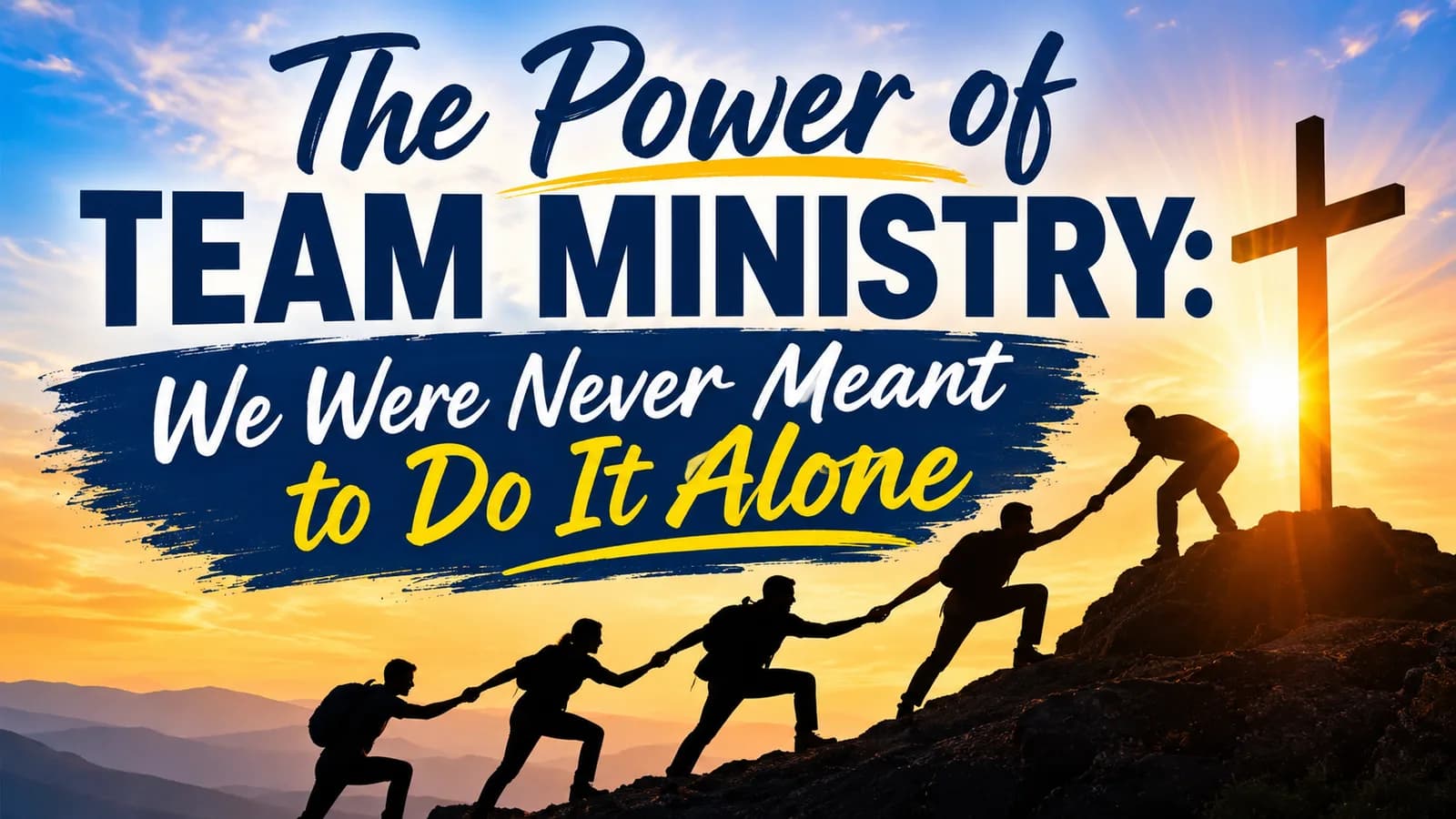
The Power of Team Ministry: We Were Never Meant to Do It Alone
By: Michael J. Decker, M.Min.
One of the greatest challenges in church leadership is recognizing that ministry was never intended to be carried by one person alone. Pastors, ministry leaders, and faithful volunteers often find themselves taking on more responsibilities than they can reasonably manage, not because they lack help entirely, but because they struggle to share the work. Sometimes it is easier to do something ourselves than to train someone else, and sometimes we mistakenly believe that being faithful means always saying yes. However, a healthy church understands that ministry is not about one person doing everything; it is about a body of believers working together to accomplish what God has called them to do. Team ministry is more than a practical way to divide responsibilities; it is a Biblical principle that protects leaders, strengthens the church, develops people, and creates opportunities for the gifts of the entire congregation to be used for God's glory.
Ministry Was Never Meant to Be a One-Person Job
In Exodus 18, Moses was attempting to handle the people's problems by himself when his father-in-law, Jethro, recognized that the workload was unsustainable. He warned Moses that he and the people would wear themselves out because the responsibility was too great for one person. His solution was simple: share the responsibility with capable people who could help carry the burden. The same principle applies to the church today. A Pastor may be gifted in preaching, teaching, and leadership, but that does not mean every ministry responsibility belongs to the Pastor. A children's ministry leader may have a passion for reaching families, but that passion does not require that person to plan every lesson, organize every event, and manage every detail alone. In 1 Corinthians 12, Paul compares the church to a body with many members, each serving a different purpose. Every member matters, but no single member is responsible for doing everything. When we understand this truth, we stop measuring ministry by how much one person can accomplish and begin recognizing what God can do through a church that works together.
Team Ministry Helps Prevent Burnout
Ministry can be deeply rewarding, but it can also be exhausting when too much responsibility rests on too few shoulders. Pastors and volunteers alike can become overwhelmed when they feel that everything depends on them, and what begins as a joyful opportunity to serve can gradually become a burden that is difficult to sustain. Team ministry helps prevent this by sharing responsibilities, creating opportunities for rest, and ensuring that the absence of one person does not bring an entire ministry to a standstill. When responsibilities are distributed appropriately, people can serve faithfully without feeling that they must sacrifice their health, family time, or personal well-being to keep everything running. A healthy ministry does not depend on one exhausted person holding everything together. It develops a team of people who can support one another, share the workload, and continue the work together. Faithfulness is not measured by how much we can endure before we burn out, but by how wisely we steward the responsibilities God has entrusted to us.
Team Ministry Provides Protection and Accountability
Another important benefit of teamwork is the protection it provides for both leaders and congregations. Even the most experienced and sincere leaders have limitations, blind spots, and moments when they need another perspective. When one person carries too much authority or responsibility without appropriate accountability, mistakes can go unnoticed and unhealthy patterns can develop. Proverbs 11:14 reminds us that there is safety in an abundance of counselors. Healthy teams create opportunities for honest conversations, wise decisions, shared oversight, and mutual encouragement. Whether the responsibility involves finances, children's ministry, pastoral care, or major church decisions, appropriate safeguards and accountability help protect the people we serve and the integrity of the ministry. Accountability is not a sign of mistrust; it is a commitment to serving responsibly. A healthy team allows leaders to lead while ensuring that decisions are made with wisdom, transparency, and the appropriate support of others. When no one is expected to carry every responsibility alone, the church becomes stronger and better protected.
Team Ministry Brings Different Gifts to the Table
One of the greatest strengths of the church is that God does not give everyone the same gifts. Some people are gifted teachers, others are natural encouragers, and still others excel in administration, hospitality, evangelism, or practical service. Some are comfortable standing before a congregation, while others faithfully serve behind the scenes in ways that make ministry possible. Romans 12:4- 8 reminds us that we have different gifts and functions, and each person has a contribution to make. When ministry depends too heavily on one person's abilities or preferences, opportunities can be missed and the church's effectiveness can become limited. However, when people with different strengths work together, they bring fresh ideas, new perspectives, and creative solutions to the challenges of ministry.
Team ministry also helps the church connect with a wider range of people. Different generations and life experiences can reveal needs that others might overlook, helping the church become more intentional in reaching families, caring for individuals, and sharing the Gospel. Unity does not mean everyone must be alike; it means we bring our differences together for the same purpose.
Team Ministry Develops Future Leaders
A church that depends on one person to make every decision and perform every task may function for a season, but it risks becoming vulnerable when that person steps away. If we never give others opportunities to serve, learn, and lead, we should not be surprised when few people are prepared to take on greater responsibility. Jesus did not simply perform ministry while His disciples watched; He invited them to participate, gave them responsibilities, and prepared them to continue the work. Likewise, in 2 Timothy 2:2, Paul instructed Timothy to entrust what he had learned to faithful people who would be able to teach others. Team ministry creates opportunities to put this principle into practice. Experienced leaders can mentor emerging leaders, volunteers can develop new skills, and people can discover gifts they may never have recognized otherwise. This requires patience because training someone may initially take longer than completing the task ourselves, but the long-term investment is worth it. The goal of leadership is not to make ourselves indispensable; it is to equip others to serve faithfully. When we invest in people, we build a ministry that can continue to grow beyond any one individual's involvement.
Team Ministry Builds Relationships and Unity
Ministry is not simply about completing tasks; it is about serving people and growing together in Christ. When people work toward a shared purpose, they develop relationships, learn to appreciate one another's strengths, and discover the value of serving alongside people who may think or work differently. Teamwork requires humility, patience, communication, and a willingness to work through disagreements in a Christlike manner. Not every idea will be accepted, and not every decision will reflect everyone's personal preference, but these moments provide opportunities to practice grace, forgiveness, and mutual respect. Ephesians 4:16 describes the body of Christ as being joined together, with each part contributing to the growth of the whole. This reminds us that every person's contribution matters, whether it happens on a platform, in a classroom, in a church kitchen, or through a quiet act of service that few people ever notice.
A healthy church does not treat volunteers as people who exist simply to fill positions or complete assignments. It recognizes that those who serve also need encouragement, care, rest, and opportunities to grow spiritually. When people feel valued for who they are rather than only for what they do, they are more likely to develop meaningful connections and a lasting commitment to the church's mission.
Building a Culture of Team Ministry
Developing healthy teams requires more than assigning people to positions. It takes clear expectations, consistent communication, intentional training, and a shared understanding of the church's mission. Leaders must be willing to delegate responsibility, invite input, and give others opportunities to grow, even when they might approach a task differently.
Churches must also be willing to evaluate their activities honestly. If the same few people are constantly overwhelmed, the answer may not be another appeal for volunteers to work harder. Instead, it may be time to share responsibilities differently, simplify a program, recruit additional help, or recognize that a particular activity is no longer serving its intended purpose. Not every church has an abundance of volunteers that can help at every activity, and building effective teams may take time. The process can begin with something as simple as inviting one person to serve alongside an experienced leader, teaching someone a new responsibility, or allowing a volunteer to take ownership of a manageable task. Small steps can establish a culture in which ministry becomes something people do together rather than something a few individuals carry alone. Ultimately, the goal is not simply to have more people involved in more activities. The goal is to build a healthier church where people are discipled, leaders are developed, responsibilities are shared, and the mission of Christ remains at the center of everything we do.
Conclusion: Stronger Together
The church does not need more exhausted leaders who believe they must carry every responsibility alone. It needs leaders who understand the value of equipping others, sharing responsibility, and building ministries that are stronger than any one individual. Team ministry helps prevent burnout, provides accountability, brings together different gifts, develops future leaders, and strengthens relationships within the congregation. Most importantly, it reflects God's design for the church as a body in which every member has a purpose and every contribution matters. If your ministry is struggling because too few people are carrying too much responsibility, perhaps the solution is not another program or another request for the same faithful volunteers to do more. Perhaps it is time to build a healthier culture of shared ministry by recognizing the gifts already present in your congregation and creating opportunities for others to participate.
We were never meant to do ministry alone! When we learn to serve together, we create space for people to grow, leaders to flourish, and the church to fulfill its mission more effectively. The question is not simply how much we can accomplish individually, but how much more faithfully we can serve when we bring our gifts, our hearts, and our efforts together for the glory of God.