When Familiarity Erodes Authority
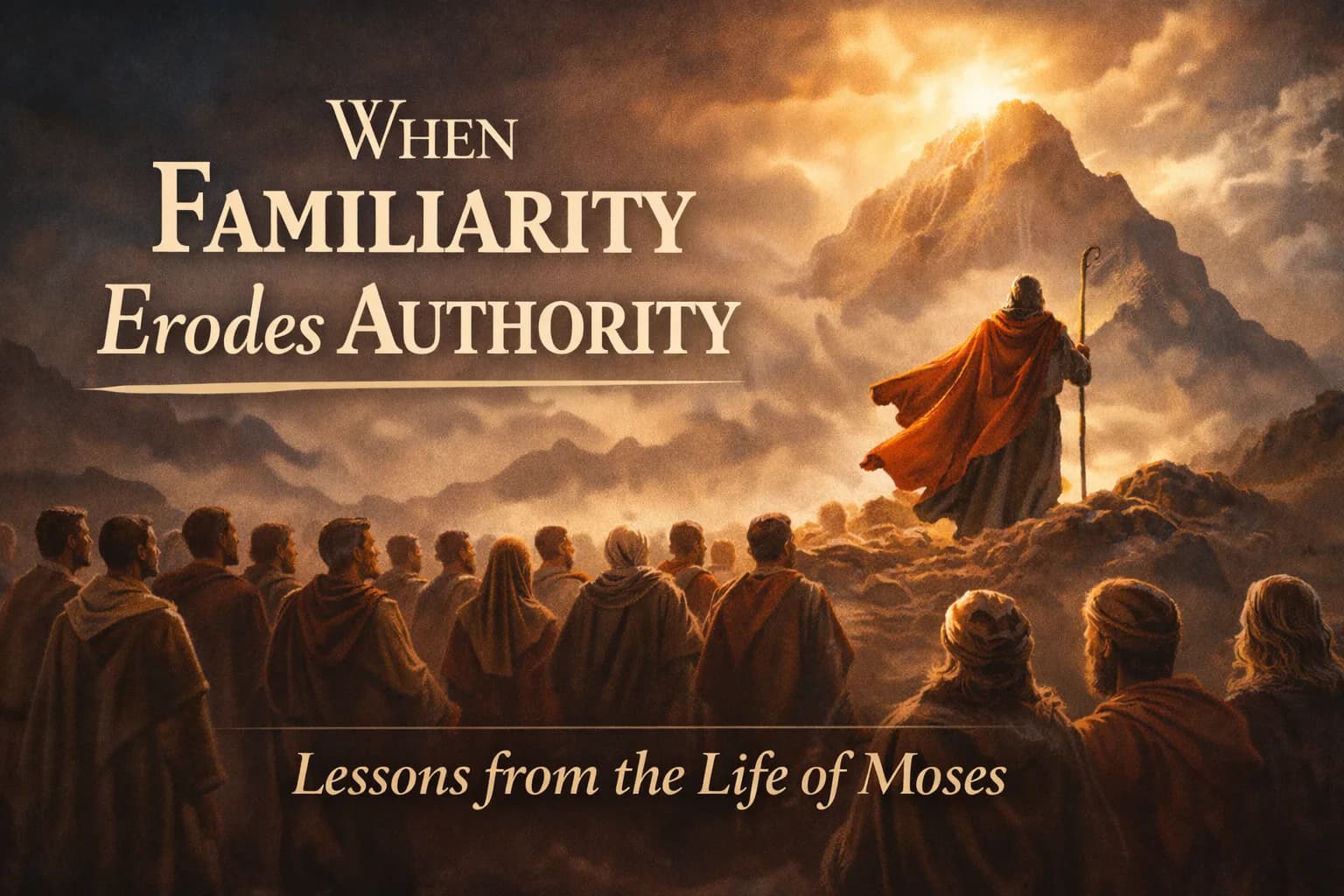
When Familiarity Erodes Authority
By: Michael J. Decker, M.Min.
Leadership in ministry carries a unique tension: it requires deep relational connection while simultaneously demanding spiritual authority and clarity of direction. Pastors, ministry leaders, and spiritual mentors are called to walk closely with people - to love, shepherd, and guide them. Yet there is a subtle danger embedded in that closeness. When leaders become too familiar with those they serve, the lines between honor and casualness blur, and what begins as intimacy can quietly erode respect. This is not a modern problem. It is as ancient as leadership itself, and Scripture provides a powerful case study in the life of Moses. His journey with the Israelites reveals both the beauty of relational leadership and the dangers of over-familiarity. Through his story, we can better understand why healthy boundaries are not optional in ministry; they are essential.
The Subtle Shift from Connection to Casualness
At the heart of ministry is relationship. Leaders are not distant executives; they are shepherds. They sit with people in grief, celebrate their victories, and walk with them through seasons of doubt and growth. This proximity is sacred. However, without intentional boundaries, proximity can evolve into over-familiarity.
Familiarity often begins innocently. People feel comfortable approaching their leader, speaking freely, even joking. While approachability is a strength, the danger arises when comfort replaces honor. When people begin to see their leader primarily as “one of us” rather than “one sent by God,” something shifts in the spiritual dynamic. The authority of leadership in ministry is not rooted in personality or charisma - it is rooted in calling. When familiarity obscures that calling, people no longer respond to leadership as something divinely appointed but as something optional, negotiable, or even dismissible. This is where the phrase “familiarity breeds contempt” becomes more than a proverb - it becomes a lived reality.
Familiarity Breeds Contempt: A Spiritual Principle
The idea that familiarity breeds contempt is not merely psychological; it is spiritual. When people become overly accustomed to a leader’s presence, they may begin to overlook the weight of what that leader carries. In ministry, this often manifests in subtle ways:
• Instructions are questioned more frequently
• Correction is received with resistance rather than humility
• Conversations shift from honor to criticism
• Private frustrations become public murmuring
At its core, contempt is not always loud or obvious. It often starts quietly - with a diminishing sense of reverence. The Israelites’ relationship with Moses illustrates this vividly. They witnessed miracles: the parting of the sea, manna from heaven, and water from a rock. Yet despite these extraordinary experiences, their familiarity with Moses led them to repeatedly question his leadership. They did not initially reject God - they first questioned the man God chose.
The Murmuring Spirit: When Comfort Turns to Complaint
One of the most striking patterns in the wilderness narrative is the persistent murmuring of the people. Murmuring is more than complaining - it is a posture of the heart that resists trust and undermines leadership.
But why did the Israelites murmur so often?
Part of the answer lies in familiarity. They lived in close proximity to Moses. They saw his humanity. They witnessed his moments of stress, his decisions, and his leadership style. Over time, their exposure to his humanity overshadowed their recognition of his divine assignment.
This led to dangerous thinking:
• “Why should we listen to him?”
• “Who made him leader over us?”
• “We could do this better.”
Comfort without boundaries gave birth to comparison, and comparison gave birth to complaint. This is a pattern that still exists today. When people become too comfortable with leadership, they may feel entitled to critique without understanding the weight of responsibility. They speak from proximity but not from perspective.
Moses and the Weight of Leadership
Moses carried an extraordinary burden. He was not merely managing a group - he was leading a nation through transformation. Yet the constant murmuring of the people took a toll on him. There are moments in Scripture where Moses expresses deep exhaustion, even desperation. He cries out to God in Numbers 11:14- 17, essentially saying, “I cannot carry these people alone.”
This is a critical insight: over-familiarity does not just affect how people view leadership - it affects how leadership functions. When leaders are constantly pulled into the emotional turbulence of those they lead without healthy boundaries, they become drained. Their ability to hear God clearly can become clouded by the noise of constant complaints.
God’s response to Moses in this moment is both compassionate and instructive.
The Establishment of Elders: Shared Leadership and Structured Distance
In response to Moses’ burden, God instructs him to appoint elders - leaders who would share in the responsibility of guiding the people. This was not just an organizational decision; it was a spiritual strategy. By establishing elders, several things were accomplished:
- The burden of leadership was distributed
- Access to Moses was structured rather than constant
- The people learned to respect layers of leadership
This system introduced a necessary distance. Not a cold or relationally detached distance, but a functional boundary that protected both Moses and the people. Healthy boundaries in ministry do not push people away - they position leadership in a way that sustains effectiveness. Too often, leaders resist boundaries because they fear appearing distant or unapproachable. But the absence of boundaries does not produce deeper respect; it often produces the opposite.
Called Beyond the People: The Leader’s Unique Assignment
One of the most profound aspects of Moses’ leadership is that he was called to go where the people could not. He ascended the mountain, he entered the cloud, and he received direct revelation from God. This distinction is crucial - leaders in ministry are not simply part of the crowd; they are called beyond it. Their responsibility is not only to relate to people but to represent God to them. When leaders lose this distinction, they risk becoming overly integrated into the emotional and relational dynamics of the group. Instead of leading from a place of clarity, they begin reacting to the pressures around them.
Moses’ time away from the people was not neglect - it was necessity. It was in those moments that he received direction, correction, and vision. Modern leaders must embrace this principle. You cannot effectively lead people if you never step away from them.
The Danger of Overexposure
In today’s culture - especially with the influence of social media and constant accessibility - leaders are more exposed than ever. While transparency is valuable, overexposure can be damaging. When people see every aspect of a leader’s life without filters or boundaries, the sense of distinction can diminish. The leader becomes overly familiar, and the weight of their role becomes diluted. This does not mean leaders should be secretive or distant. It means they must be intentional. Not every moment needs to be shared, not every conversation needs to be accessible, and not every relationship needs to be equal in proximity. Boundaries protect the sacredness of leadership.
Healthy Boundaries: What They Look Like in Practice
Establishing boundaries in ministry is not about creating walls - it’s about creating structure.
Healthy boundaries may include:
• Defined access: not being available at all times for all things
• Delegation: empowering others to lead and care for people
• Private spaces: protecting time for prayer, study, and rest
• Clear roles: helping people understand leadership structure
These boundaries communicate something important: leadership is a responsibility, not just a relationship. When boundaries are clear, people are more likely to approach leadership with intentionality and respect.
Rebuilding Honor in a Culture of Casualness
If familiarity has already eroded respect, rebuilding honor requires intentional effort - from both leaders and those they lead. Leaders must:
• Re-establish clarity in their role
• Communicate expectations with confidence
• Resist the urge to over-explain or over-defend
• Spend time in God’s presence to remain anchored
At the same time, people must be taught the value of honor. Honor is not about elevating a person above others - it is about recognizing the grace and responsibility assigned to them. Without honor, leadership becomes ineffective. Without boundaries, honor becomes unsustainable.
Lessons from Moses for Today’s Leaders
The story of Moses offers several lessons:
- Closeness must be balanced with calling. You can love people deeply without losing the distinction of your role.
- Murmuring often follows over-familiarity. When people lose sight of divine assignment, they default to human critique.
- Shared leadership is not weakness - it is wisdom. The establishment of elders strengthened the entire community.
- Time away from people is essential. Leaders must prioritize their connection with God above their accessibility to people.
- Boundaries protect both leader and community. They create space for clarity, sustainability, and respect.
Final Thoughts: Leading with Both Heart and Structure
Ministry leadership is not a choice between being relational and being authoritative - it is a calling to embody both. The challenge lies in holding that tension without allowing one to undermine the other. Familiarity is not inherently wrong. In fact, it can be a powerful tool for connection and trust. But without boundaries, it becomes a liability. The goal is not distance - it is distinction.
Moses walked among the people, yet he also stood apart. He listened to their concerns, yet he ultimately answered to God. He loved them deeply, yet he did not allow their constant complaints to redefine his calling. That balance is the mark of mature leadership.
In a world that increasingly values access over honor and casualness over reverence, ministry leaders must be intentional about guarding the space God has entrusted to them. Because when boundaries are healthy, relationships thrive. When leadership is clear, people grow. And when honor is preserved, the entire community moves forward with unity and purpose.
The lesson is simple, but not easy: stay close enough to love the people - but far enough to lead them.
If this Blog speaks to you, you'll find more honest conversations about the realities of ministry in my book, Ministry Unmasked. Order your copy today!