You’re More Than Your Ministry: Why You Need a Hobby
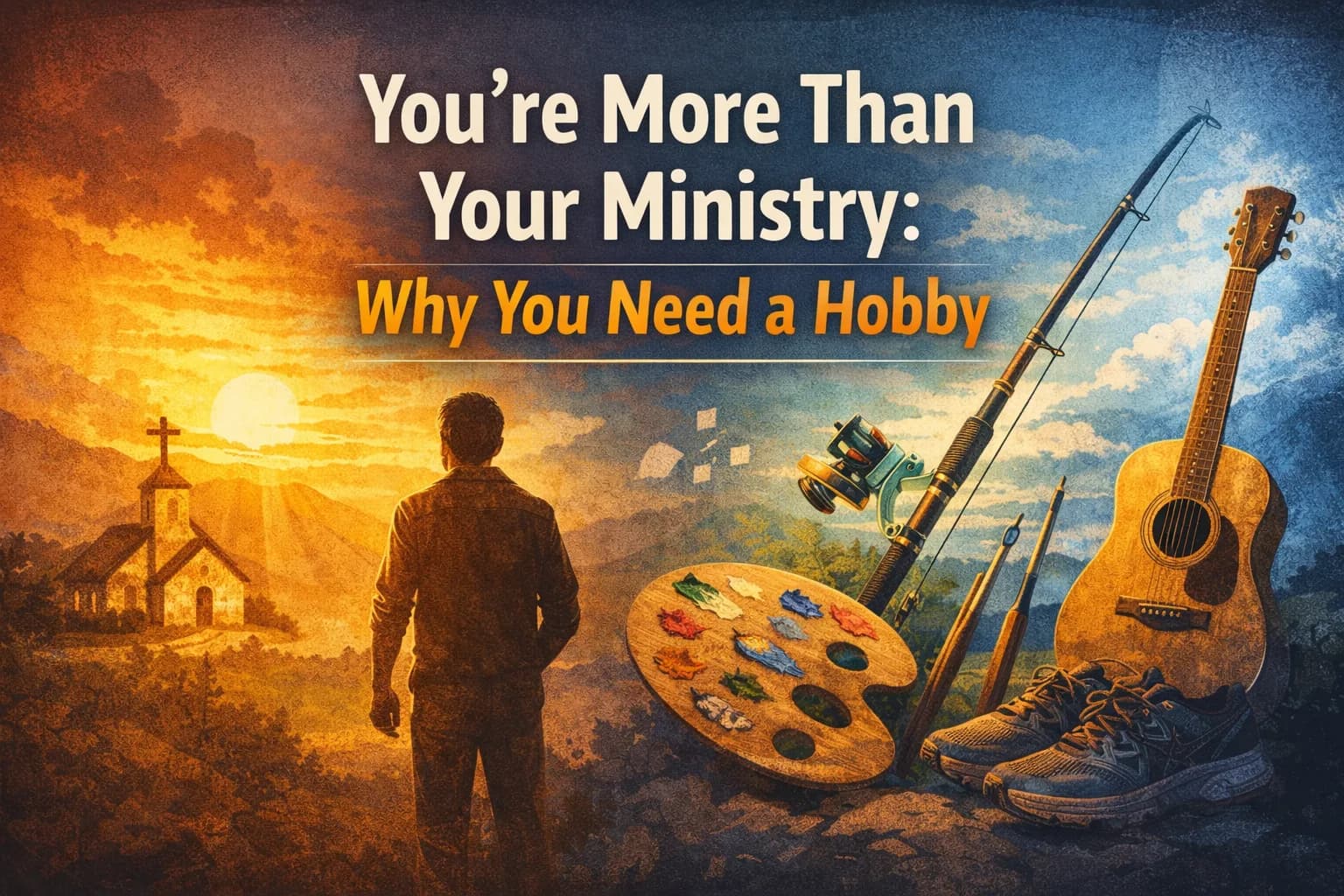
You’re More Than Your Ministry: Why You Need a Hobby
By: Michael J. Decker, M.Min.
Ministry has a way of filling every available space in your life. Not always intentionally, not always dramatically, but steadily. What begins as a calling - something meaningful and life-giving - can gradually expand until it occupies not only your time, but also your identity. You become known as the one who serves, the one who leads, and the one who shows up when others are in need. And over time, something subtle begins to happen. The parts of you that exist outside of ministry begin to shrink. The things you once did for enjoyment - for no other reason than they brought you life - start to feel unnecessary, even indulgent. You tell yourself you’ll come back to them later - when things slow down, when responsibilities ease, or when there’s more time. But in ministry, there is always more to do. So “later” keeps moving. And eventually, without realizing it, you stop doing things simply because you enjoy them. You stop creating, you stop exploring, and you stop playing. And while that may seem like a small loss, it carries a deeper impact than most people realize. Because when you lose touch with what brings you joy, you don’t just lose a pastime - you lose part of yourself.
The Misconception: Hobbies Are Optional
For many in ministry, hobbies are often viewed as optional - nice to have, but not necessary. After all, when your life is centered around serving others, it can feel difficult to justify spending time on something that doesn’t directly contribute to that mission. There is often an internal dialogue that sounds something like this:
• “I could spend this time helping someone.”
• “There are more important things I should be doing.”
• “This feels unproductive.”
And so hobbies get pushed aside - not because they lack value, but because their value isn’t immediately measurable. But that way of thinking overlooks something important: not everything that matters produces visible results. Some things matter because of what they restore. A hobby is not a distraction from your calling; it is a support to it.
You Are More Than Your Role
One of the hidden challenges of ministry is how easily your role can become your identity. You are not just someone who does ministry - you become the ministry person. And while there is nothing wrong with being deeply committed to your calling, there is a danger in allowing that calling to define the entirety of who you are. Because when your identity becomes too closely tied to your role:
• Your sense of worth rises and falls with your effectiveness
• Your emotional health becomes tied to outcomes you cannot control
• Your ability to rest becomes dependent on whether the work feels “finished”
A hobby creates space for you to exist outside of that role. It reminds you that you are not just a leader, a pastor, or a servant - you are a person. A person with interests, curiosities, creativity, and joy. And reconnecting with those aspects of yourself is not a departure from your calling - it is a way of grounding yourself within it.
The Quiet Erosion of Joy
One of the most noticeable consequences of a life without hobbies is the gradual loss of joy. Not necessarily dramatic sadness; not even obvious burnout; just… a dulling. Life becomes functional, efficient, and focused, but something is missing. Hobbies introduce something that ministry alone cannot always provide: low-pressure joy.
In ministry, much of what you do carries weight. There are expectations, outcomes, and responsibilities. Even the most meaningful moments can feel heavy because they matter so much. A hobby, on the other hand, exists without that weight. You don’t have to be good at it, you don’t have to justify it, and you don’t have to turn it into something productive. You simply engage in it because it brings you life. And in doing so, you create space for joy to exist without pressure. That kind of joy is not trivial - it is restorative.
Creativity Is Not a Luxury
Many hobbies involve some form of creativity - whether it’s writing, painting, building, cooking, playing music, or even gardening. And creativity has a unique way of engaging parts of your mind and soul that structured responsibilities often do not. Ministry, especially over time, can become highly structured. There are rhythms, expectations, and patterns that guide what you do and how you do it. While structure is necessary, it can also become limiting if it is the only mode you operate in. But creativity disrupts that; it invites exploration, experimentation, and freedom. It allows you to engage without needing to produce something perfect or meaningful for others. And in that freedom, something important happens: you begin to feel refreshed. Not because you’ve done something “important,” but because you’ve done something life-giving.
Mental Health and Emotional Renewal
There is also a practical dimension to hobbies that cannot be ignored: they are good for your mental health. When you are constantly engaged in emotionally demanding work - as ministry often is - your mind needs space to decompress. Without that space, stress accumulates. Your thoughts become crowded, your emotional capacity narrows, and your ability to process and respond begins to weaken. However, a hobby provides a mental shift.; it gives your brain a different kind of focus - one that is not tied to responsibility or pressure. Whether it’s something active like running or something quiet like reading or painting, the key is that it allows your mind to rest from its usual patterns. This kind of rest is not passive; it is active renewal. And over time, it strengthens your ability to return to ministry with clarity and emotional presence.
You Don’t Have to Monetize Everything
In today’s culture, there is a strong push to turn hobbies into something productive. To monetize them, to grow them, or to make them “useful.” But not everything needs to become a side project. In fact, turning your hobby into another responsibility can strip it of the very thing that made it valuable in the first place. A hobby should be something that belongs to you - not your audience, not your ministry, and not your platform. Just you. It doesn’t need to be impressive. It doesn’t need to be shared. It just needs to be something that brings you life.
Practical Ways to Reintroduce a Hobby
If it’s been a long time since you’ve had a hobby, starting again can feel surprisingly difficult.
Here are a few simple ways to begin:
• Start Small
• You don’t need to commit hours of your week
• Start with 20 - 30 minutes
• The goal is not intensity - it’s consistency
• Choose enjoyment over efficiency
• Pick something you want to do, not something you feel you should do.
Please keep in mind, this is not about self-improvement - it’s about renewal.
But just like rest, hobbies need to be intentional. If you don’t protect the time, something else will take it. Treat it as a meaningful part of your rhythm - not an afterthought. Ministry is not meant to consume every part of your life; it is meant to be part of a whole, healthy life. A life that includes rest, a life that includes joy, and a life that includes things that are not measured by impact or productivity. Having a hobby does not make you less committed; it makes you more sustainable. It allows you to show up not just as someone who gives - but as someone who is continually being renewed.
Closing: Rediscovering What Brings You Life
If you’ve lost touch with hobbies, you’re not alone. It happens slowly, gradually, and almost imperceptibly. But it doesn’t have to stay that way. You can begin again. You can rediscover what brings you joy - not because it serves a purpose, but because it reminds you of who you are. And that matters! Because the healthiest ministry does not come from people who are constantly depleted; it comes from people who are living full, balanced, and renewed lives.
So pick something.
Anything.
And give yourself permission to enjoy it.
Not because you’ve earned it, but because you need it. And because, in ways you may not immediately see - it will make you better at the very thing you feel called to do.
If this Blog speaks to you, you'll find more honest conversations about the realities of ministry in my book, Ministry Unmasked. Order your copy today!